The Biology designs
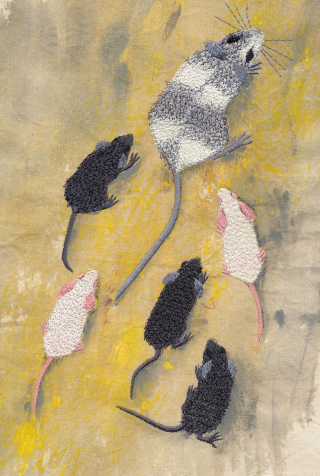
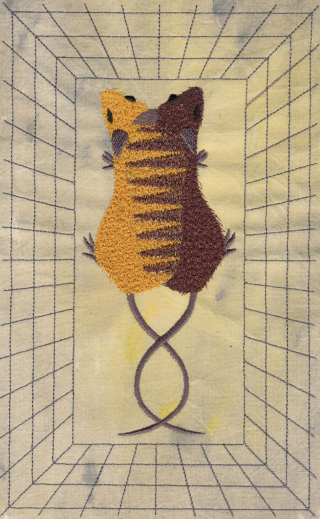
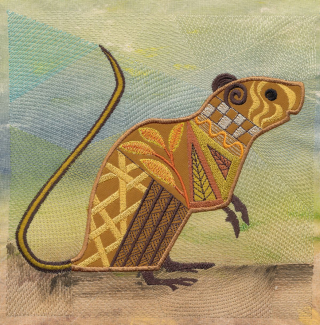
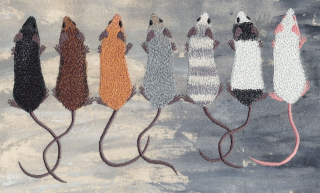
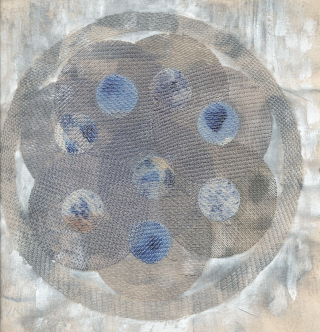
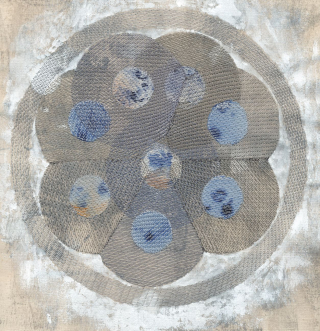
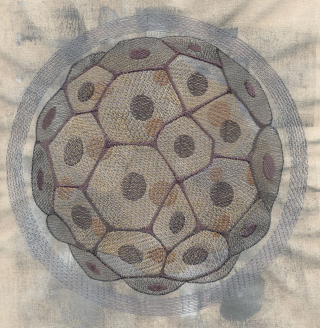
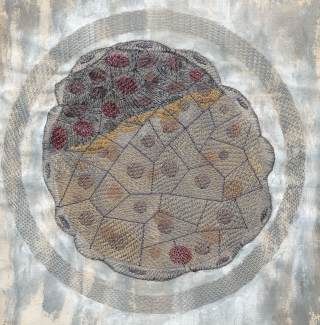
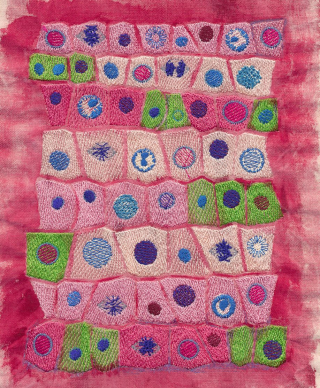
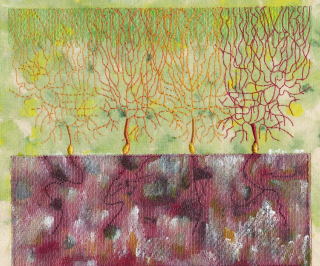
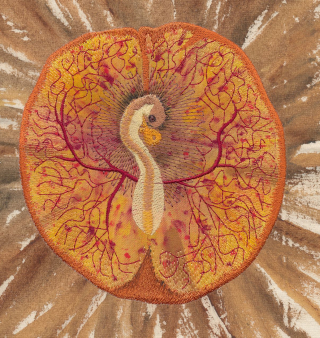
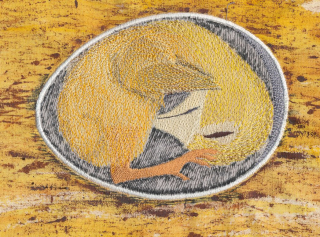
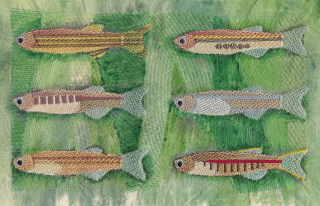
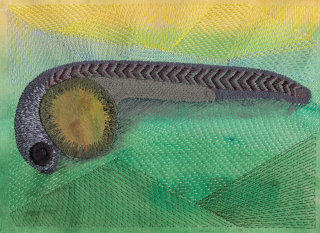
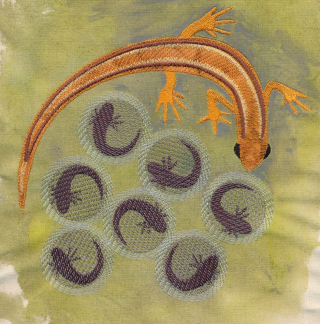
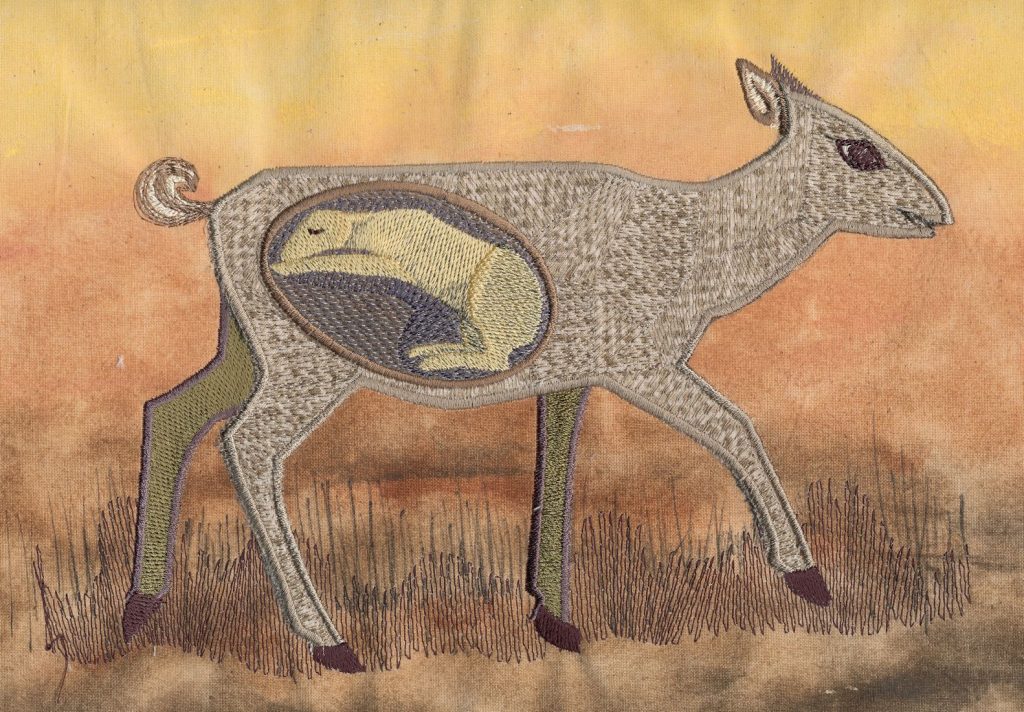
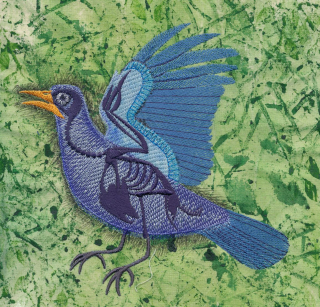
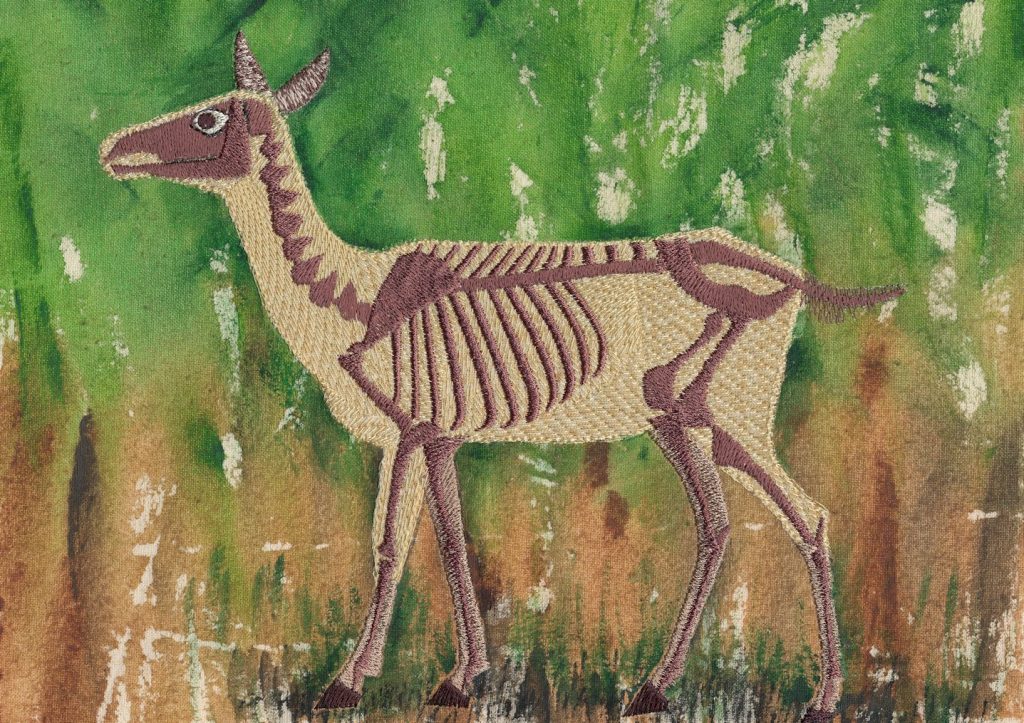
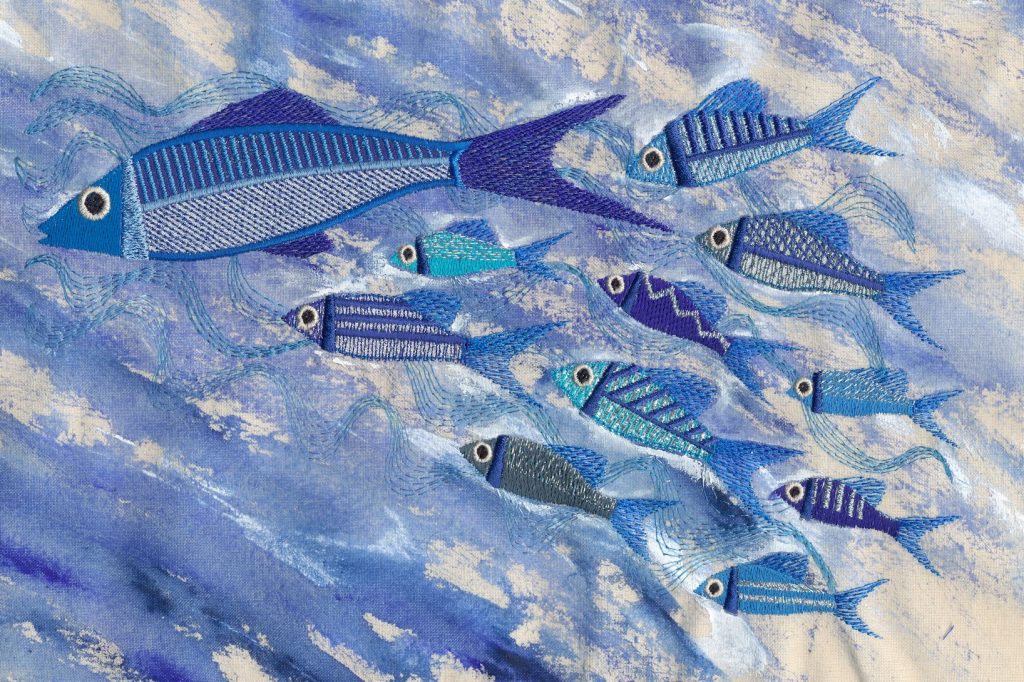
I’m really sorry to have missed so many weeks posting, but life has been so busy there’s been no time to do ANYTHING except work on the pieces for the upcoming show. This exhibition, which will consist all of pieces inspired by embryology and genetics, is going to take place at an embryological conference in Edinburgh at the end of the month, and as it’s a “one-woman show”, I have to produce enough things to make up a reasonably large exhibition. And believe me, it hasn’t been easy! My saintly husband has been looking after all the household matters while I work all day and nearly all night tearing my hair out at the computer and the machine. So far I’ve got 19 pieces digitised, and am in the middle of stitching them out
But I’m well overdue for August’s freebie, so I’d better do something about that. This is a decorative piece I did a long time ago for no particular reason, and I’d be pleased to see it used. The original version was for the 6 x 10 inch hoop, but I know that not everyone has one of those, so I’ve shrunk and simplified this for the 5×7 inch hoop. However I think the quality is better in the larger size, so If you’d prefer the large version let me know, although I might not get round to answering you until after the end of the month!
A small bird on a small branch
Back in April, a kind blog reader sent me a lovely picture of some red flowers she’d grown – thank you, Margaret H.! The flowers weren’t familiar to me, but she called them spider lilies, and they look very exotic. That bold shade of red was irresistible, and I loved the way the red contrasted with the blurry, green and black background.
Margaret's flowers
I thought they'd make a dramatic design, so I simplified the flowers for the design, and using different (but similar) shades of red, stitched them on a painted black and green background.
My version of Margaret's flowers
Now, I might have to miss the occasional blog posting in the next few weeks, because an old colleague of mine from my scientific past has asked me to put together a small exhibition of designs based on themes of genetics and stem cells, which she plans to show at an upcoming scientific conference. I really love this idea and desperately want to do it, but she’s given me just one month to design, digitise, paint and stitch out an exhibition-ful of designs, and whether or not I’m going to be able to do it remains to be seen! So please forgive me if I miss a posting or two – I’ll be back eventually with (I hope!) some photos of the science-into-art exhibition
One of the main problems with me and machine embroidery is that I love to draw and digitise, but I’m not all that enthusiastic about actually stitching things out, which means that designs tend to sit and wait for weeks on end in my “Things To Stitch” file. Last week I realised that I had seven large panels and designs waiting patiently for their turn at the machine, and at least three or four more almost ready to go. So with a deep sigh I’ve closed the sketchbook, turned off the computer and dragged out the machine to try to catch up a little. Here’s one that’s been waiting a long time – it’s a gaggle of rooks in a harvested field which I sketched last autumn (that will show you how long these poor designs have to wait to be stitched). I like all kinds of crows but I have a particular soft spot for rooks – their strange faces are old and wise and primitive and ancestral, all at the same time
After the harvest, the rooks come in
One of Britain’s favourite illustrators – especially of children’s books – is Quentin Blake, and I’ve always loved his simple and free style. The other day I found one of his pictures in a newspaper, and it really “spoke” to me. I felt as if I could have drawn those birds myself!
Quentin's birds (and other characters)
So I just did a quick and simple design of couple of birds in a style that combined his shapes and colours with my general style of drawing birds and came up with this. I called it Firebirds because it does look as if they’ve just sprung to life out of a blazing fire . So thanks, Quentin, for the inspiration!
My homage to Quentin's birds
Well, it’s not quite the first of the month, but it’s close enough, so here’s a freebie for July. It’s another one from the archives, from a series of Chinese birds I did some years ago. I’ve no idea what kind of bird it is – I can only suppose it’s some kind of Chinese bird. If anyone recognises it, do let me know! It’s quite a realistic rendition, and by the way you should stabilise it well, because parts of it are inclined to “pull” a little. You can leave out the blue frame if you like
The free bird for July
It’s for the 5×7 hoop, and I think I should apologise to those readers who can’t stitch something this large, because I read on the artisansquare forum that not everybody can cope with this size of hoop. Unfortunately I do very few things for the 4×4 hoop any more, and usually work for the larger 8×8 or 10 x 6 inch sizes. And from the quick survey I did a few months ago it does seem as if most readers also use these sizes. However, if you’re stuck with a small hoop I’ll try to dig up some old 4×4 inch designs for next month
I hesitated for a long time before deciding to post this, because it isn’t so much a design as a technical experiment, and it probably won’t be of much interest to most people, apart, perhaps, from other digitisers. I hope I don't lose too many readers because of it! It all began with a Tom Phillips’ painting, Autumn, which has fascinated me for a long time.
Tom Philips' "Autumn"
It looked to me like a flock of birds (mind you, most things seem to remind me of flocks of birds!) and I began playing around with ways of reproducing the effect of his painting in embroidery. Some of the things I tried were: overstitching shapes in colours that contrasted with the colours of appliqueed fabrics, outlines done in running stitch and triple stitch, overlapping shapes made up of layers of very low density embroidery, low density embroidery overlapping and running in different directions, clashing colours of background, thread and applique fabric, and a lot more
Experiment based on "Autumn"
Because I was working with Tom Phillips’ abstract painting as inspiration, my piece also turned out to be pretty abstract itself, which I hadn’t really intended. With hindsight I should maybe have given individual birds a bit more character and not made them all so much a part of the general cloud. But you can’t get it 100% right all the time, and I can use this piece as inspiration for the next one in the series
Regular blog readers must be getting totally fed up with embroideries inspired by the Dorset Bay artists, but I’m afraid this week we have yet another. This one is taken from a little stone carving of what might possibly be another loon. Like all the Dorset Bay animals it’s simple but heartfelt, with a genuine sympathy for its subject.
The original little bird
I didn’t change this one much – mostly just re-interpreted it in embroidery and fabric, and it’s very simple. The background weed is made of thin layers of low-density embroidery stitched over fabric that’s been scrubbed with paint. The painted applique fabric of the bird’s body is overstitched with iridescent blue thread, which I’m afraid doesn’t show up well (or at all) in the scan
Bird plus fish
At first the picture was just of the bird, but that wasn’t enough – the bird in itself wasn’t really all that interesting. Then I realised that the bird would probably be chasing something, so I put in a few fish for him to hunt. The fish are highlighted with Sulky Holoshimmer thread, one of those glittery, shimmery threads that I really like. It featured in the fish panel I posted a couple of weeks ago, and I’m beginning to use it a lot to give a subtle, barely visible glimmer to embroidery
OK, I promise that next week I’ll try to move out of Dorset Bay!
We’re back from Edinburgh, (which was great) but things have again been so manic that I haven’t had the chance to organise anything new for June’s freebie. So here’s one from the ancient archives, from the same series as the Jacobean tree I gave as a freebie a couple of years ago. It’s based on the traditional Jacobean “Tree of Life” designs, with a rabbit thrown in for good measure.
Jacobean Tree of Life, plus rabbit
Please forgive the slightly sloppy stitchout – this was a first version before I corrected a few things, and I just haven't had the time to stitch it out again. Also, it was done with an ancient version of the PED software, and so the image on your screen may look a little different than my usual designs. It’s all embroidery (no applique) and it’s for the 5×7 inch (130 x 180 mm) hoop. Click here for the .pes file (in v.6) and here for the worksheet.
I’m afraid the worksheet is very complicated – that’s because the design is so complex that it’s difficult to describe all the various parts of it, and there are so many different colours appearing in so many different places that it’s almost impossible to describe accurately where everything goes. However, I wish you good luck with it!
Things have been so hectic recently that I’m afraid I missed posting last week. The sales at our local exhibition have been good, and I’ve needed to spend all my time stitching out replacements for things that have been sold, and because that has meant re-stitching old designs I haven’t had the time to do anything new. This is very frustrating as my list of new ideas just keeps getting longer!
But I did find this stitchout from a while back. It was one of the experiments that I did drawing birds with their wings pointing down – this got done at the same time as the big heron from a few weeks ago. This one’s a little hawk, and you may be able to see that there is the text of a poem written on the feathers. The poem is "Windhover" by Gerard Manley Hopkins, and I thought it went well with the bird. Of course you can’t really read the text because the letters are so faint, but I like the idea that it’s there all the same, even if it can’t be read
And after missing last week’s posting I’m afraid that I’ll miss next week’s as well, because we’re off for a few days R&R in Edinburgh. I’m really looking forward to visiting a few galleries and seeing a couple of shows, and hope to come back with some new ideas for designs. So as a result of all this, I’m afraid June’s free design will be postponed for a week, but I’ll get it posted in the second week of the month